Say This, Not That: Helping your Child Navigate Recovery of Disordered Eating During the Holidays and Celebrations

The holiday season is a time for celebration, and many feel good feelings are often surrounded by food. For someone who struggles with disordered eating or an eating disorder (ED), this may make this time of the year more difficult to navigate through. Being your child’s advocate will be important to support them through this time, so it’s important to consider boundaries and conversations that may need to be had with family members or friends that you may be visiting during the holidays.
In this blog post, I will go over some common things that are heard at holiday celebrations and how to change it so it’s less likely to trigger your child’s disordered eating or ED. This may also be a great post to forward to those family and friends you’d like to be more aware of you’re child’s struggle, so they can be of support.

What not to say: “You’re looking a lot healthier!”
Say this instead: “I’m so happy that you are here with us today.”
While this may feel like a good thing to say to someone, a statement like this may trigger body image noise that individuals who struggle with disordered eating or ED’s have worked hard to ignore. Saying to someone, such as “I’m so happy that you are here today” helps put the individual in the moment and may also make them feel that their presence is desired.

What not to say: “My guilty pleasure are the sugar cookies mom makes.”
Say this instead: “I love eating mom’s sugar cookies, they bring me many warm memories!”
A statement like this around someone who struggles with food noise can be triggering since it categorizes sugar cookies (or any other food) as “bad”. It’s better to talk about food in a way that is positive or mutual, so that way it doesn’t make one feel guilty about their food choices or encourages them to avoid certain food groups, worsening their disordered eating patterns.

What not to say: “I’m being bad today and having seconds!”
Say this instead: “This food was delicious; I have to have more!”
This statement makes it sound like enjoying food and wanting more of it is not a “good” thing, leading to thoughts of guilt surrounding having extra portions of food. If you are around someone with disordered eating patterns, making a comment in a more positive way can remove the feelings of guilt and show them that it’s okay to want a little more during a special celebration.

What not to say: “You’re so thin, you could have all the cookies you want!”
What to say: “I brought some cookies; you’re more than welcome to enjoy some!”
This statement may cause a trigger with body image. It’s associating weight with being “allowed” to have more food. Someone with body dysmorphia likely feels larger than they are, so it may make one feel they need to meet certain qualifications to enjoy the foods they’d like to eat. It is essential to avoid any comments of someone’s body to avoid triggering negative thoughts.

What not to say: “I have to lose weight, or I’ll never be able to fit in my New Year’s dress.”
What to say: “I can’t wait to show you what fun outfit I planned for New Years”
Even if you are talking about yourself, the conversation alone can be triggering. Avoid talking about diet or weight loss/gain and stick to just looking forward to fun moments and memories with those you love.
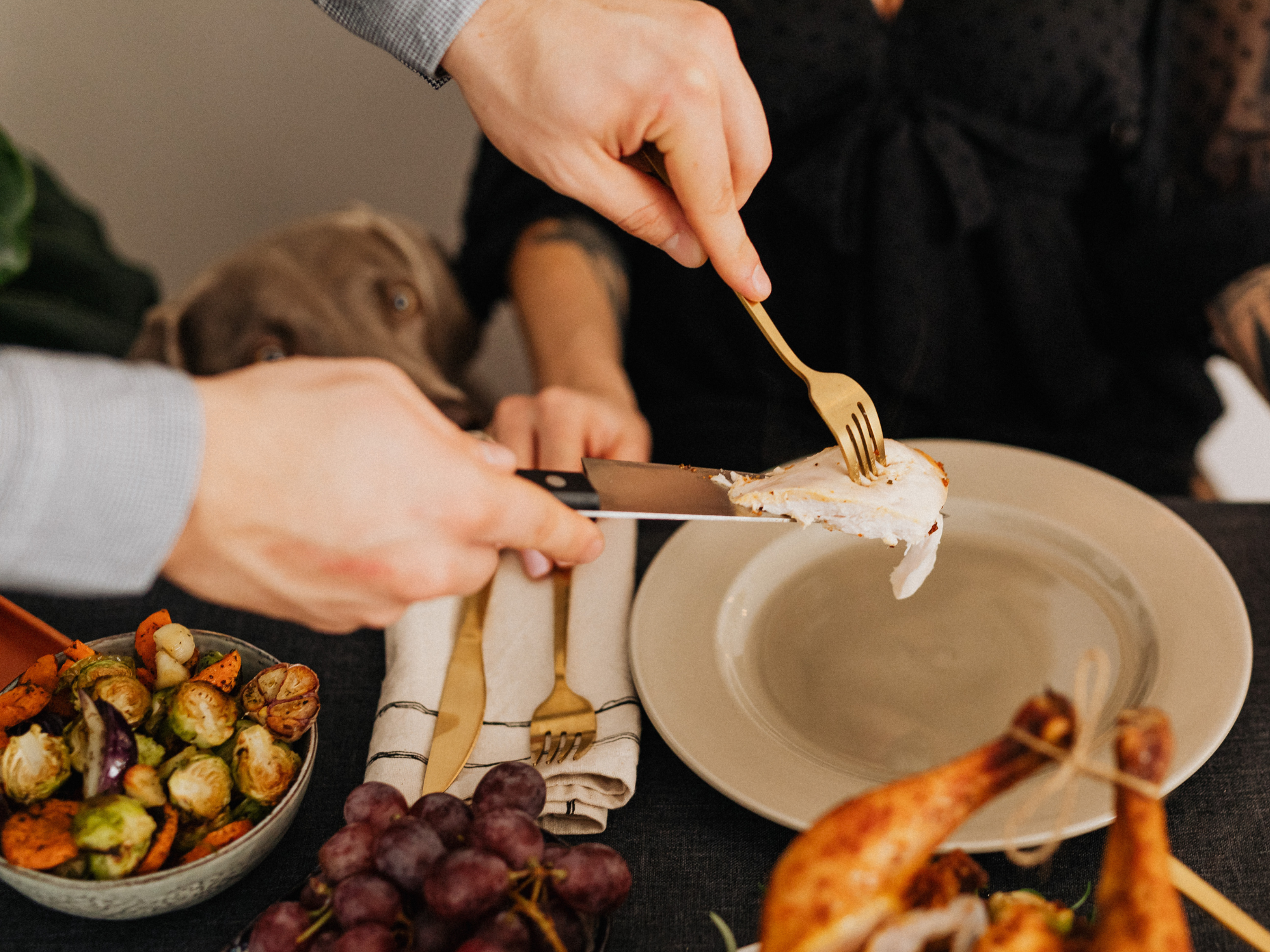
What not to say: “Are you going to eat all of that?”
What to say: “Isn’t the food delicious? I’m so glad we get to enjoy a dinner together!”
Making a comment on how big or small someone’s plate is can absolutely be triggering. For example, if someone is actively working towards appropriate weight loss, then commenting on the size of their plate may trigger binge eating later, since they may feel that they need to avoid eating as much around others. Another example is if someone has a small plate and this comment is made. This individual may be finally trying “fear” foods, and whether this comment is because you’re impressed with their choices, it can lead to embarrassment and worsening their food noise. Once again, it’s better to comment on enjoying the moment and the company, than the food that’s being consumed.

Coming up with a plan:
These simple conversations can become triggering and overwhelming for someone battling food noise, so it’s important that you have a plan ready. Discuss your child’s needs with their healthcare team (pediatrician, therapist, and dietitian) so that if things become hard for them, there is a plan to fall back on.
Some of the ways you can help build a plan are:
- Monitor your child’s screen time and limit social media use.
- Encourage anchoring techniques such as arts & crafts, journaling, and music during high-anxiety times.
- Say no to events that may trigger your child during their recovery journey.
- Let them know you are there for them and ready to support them during tough moments.
- Have a meal plan ready that ensures your child is getting enough nutrition if meals/food choices start becoming tough for them
- Talk with family members and friends, privately, prior to events so they can also help create a better experience for your child during recovery. It’s okay to set boundaries, such as avoiding conversations about diet and weight at the dinner table.
- Know what signs to look out for to know if you need to act on the plan you have created. This may look like anxiety or isolation.
Food often is a part of the culture of celebration; however, it doesn’t have to be the star of the celebration. With the right type of support, your child will have less of a chance of being triggered and hopefully start to learn that the holiday season is about being in the moment, creating moments with those you love.
-Maura Fowler, MPH, RDN, CPH